Hyper-Personalization: The New Premium Baseline
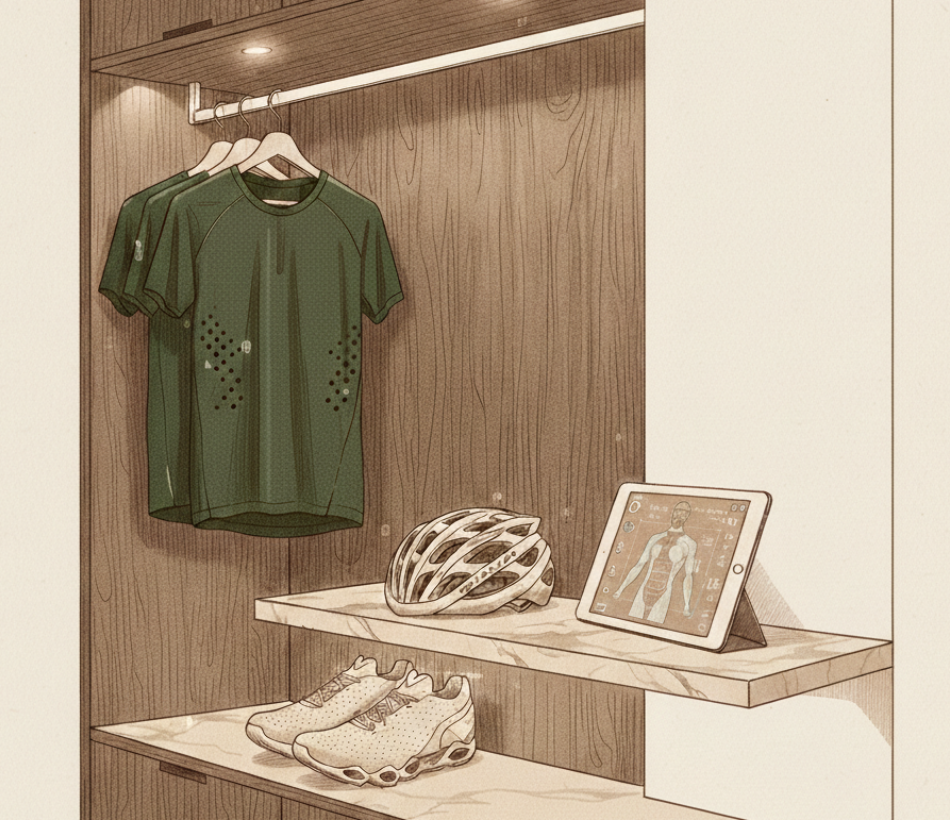
Identity does.
From Performance to Identity
Today’s athletes don’t question whether gear performs; they assume it does. Instead, they ask whether a product reflects who they are and if they will be recognized by their peers. As performance has become democratized and standardized, standing out has become the key differentiator.
The irony of the modern market is paying a premium for cutting-edge gear, only to line up at an event looking exactly like everyone else. No athlete wants their identity diluted by their search of performance alone.
When Sport Borrows From Fashion
Along the way, sports brands are increasingly borrowing from the fashion world.
Brands like Tracksmith and Satisfy exemplify this shift by balancing technical sophistication and aesthetic identity. Whether it is Ivy League-inspired gear or intentionally faded running tees riddled with ventilation holes, these pieces conceal technical sophistication, trading overt statements of performance for nostalgia, studied nonchalance, and cultural fluency.
This same impulse is fueling the revival of the genuine vintage merch market. For modern athletes, a rare marathon finisher shirt carries more cultural capital than carbon-plated supershoes.
However, sports brands are walking a narrow runway. If they drift too far into haute couture collaborations without a credible functional foundation, the premium status risks losing its footing. Aesthetics and exclusivity can only endure as long as performance remains a non-negotiable baseline.
Customizing Legitimacy
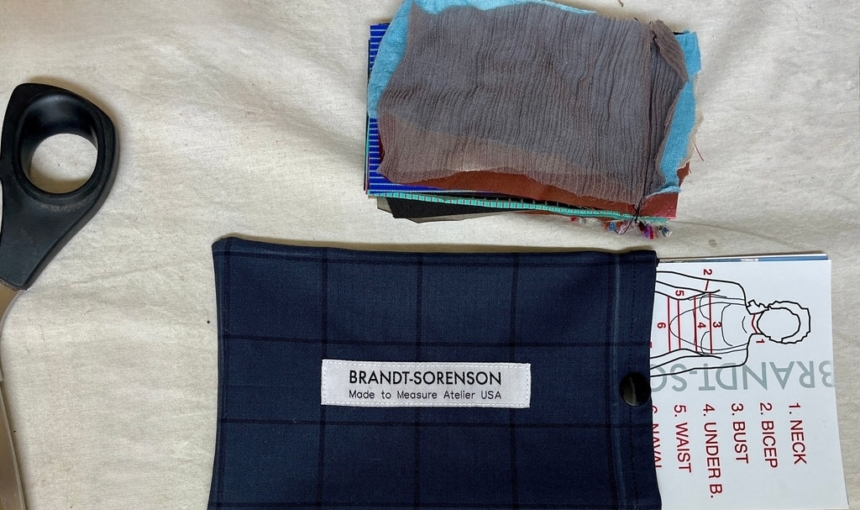
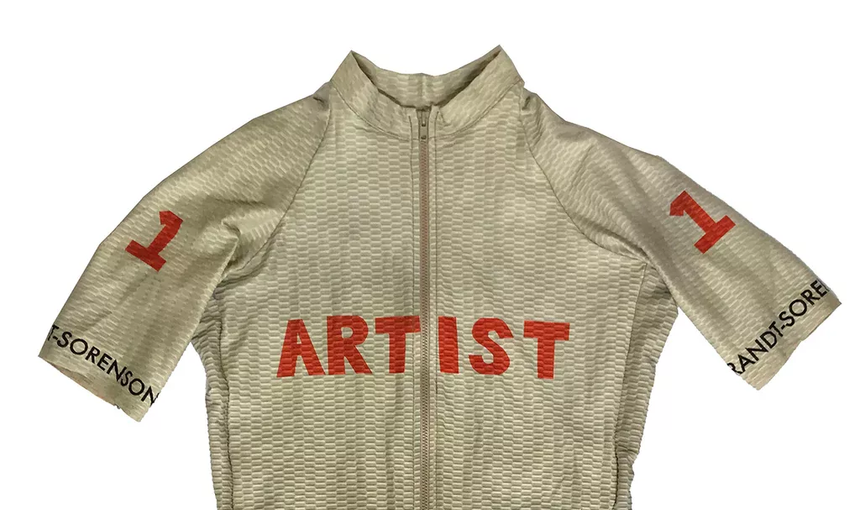
As performance converges across the industry, premium gear needs a new justification. While exclusivity is fragile and easy to copy, customization offers a more defensible moat: a fit that is personal, functional, and impossible to contest at scale.
A custom-fitted piece of sports gear doesn’t just perform better; it legitimizes the athlete. It signals a conscious decision to move beyond the standards.
While personalized gear was once niche–convenient, expensive, and reserved for professionals–technological advances have removed the friction.
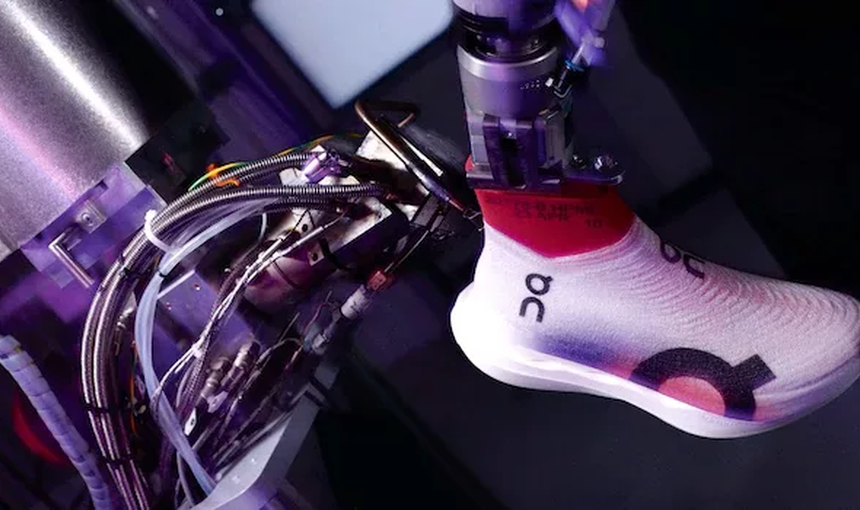
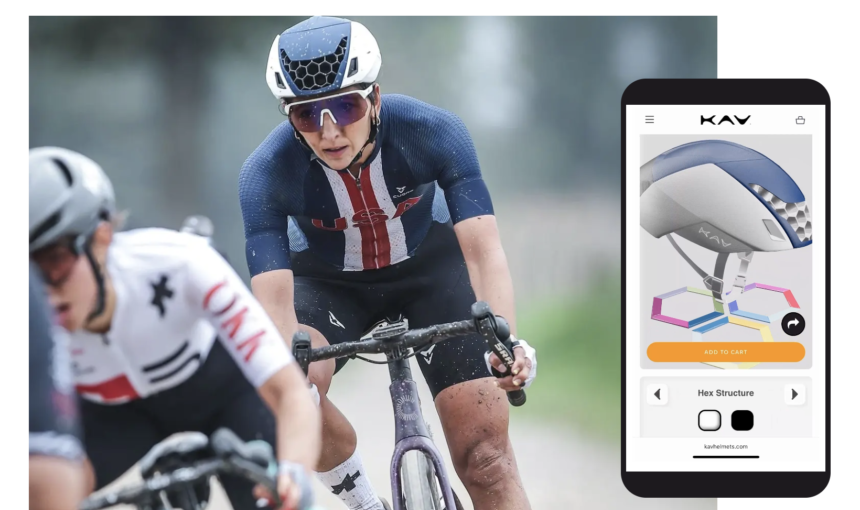
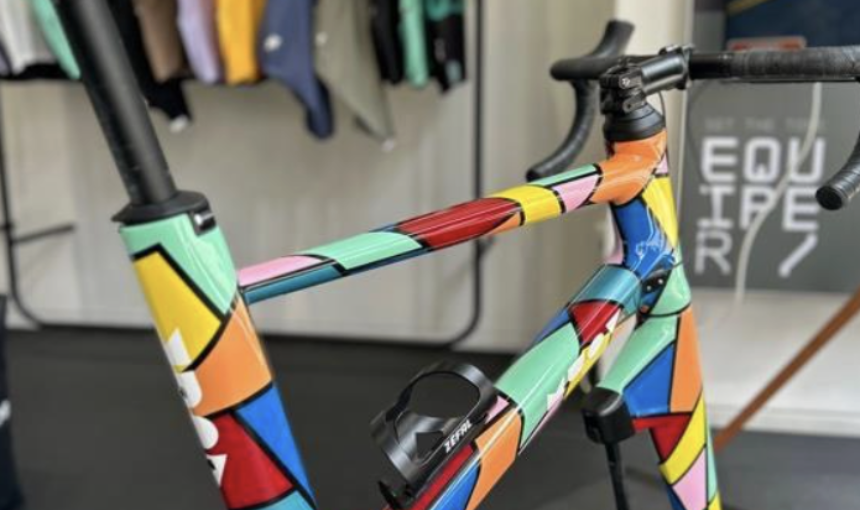
Innovations like ON’s LightSpray one-piece upper shoe sprayed by a robotic arm onto a carbon-plated sole, KAV’s 3D-printed bike helmets from cyclists head scans, or MUOV indoor bike frames with customized paint jobs are driving the shift.
On the surface, the reasoning for customization is fit, aerodynamics, and efficiency. But the deeper appeal is functional exclusivity and intentional identity. In this new era, premium status is an outcome of intent and design, not just a price tag.
Resilience Against Pressure
In theory, premium and exclusive gear should be among the first to suffer during an economic downturn. Instead, the category has shown resilience while generic products proved more vulnerable.
Part of the explanation lies in the sustained rise in endurance and individual sports–where communities, self-definition, and belonging coexist.
Athletes are not irrational spenders, but products tied to self-expression and personal commitment are harder to abandon than generics. In downturns, emotional ties appear to matter more than marginal savings.
The Future of Scale
The products most likely to endure sit at the intersection of premium aesthetics, personalized function, and mass price. We are moving toward a future where customization at scale is within reach. Custom-fitted sportswear minimizing drag or featuring personalized pockets & zip layout. Protective gear reinforced according to individual biomechanics or a return of truly custom-fitted shoes, skates, and ski boots.
The shift toward hyper-personalization marks a permanent move from equipment as mere tools to physical manifestations of an athlete’s unique identity and biomechanics. From athletes as passive consumers to athletes as active co-creators.
As 3D printing, smartphone bio-scanning and AI-driven fitting propagate, the question is no longer if the movement will permeate outside endurance sports–e.g. racquet and team sports–but when.
In an era of infinite choice, the ultimate luxury is a product that was quite literally made for no one else.
