WEIGHT LIFTING BLIND

Yet for all its momentum, strength remains one of the few performance domains not conquered by data the way aerobic training has.
Training Cardio Like Accountants, Lifting Weights Like Artists
Over the last decades, endurance training has become a spreadsheet: paces adjusted for heart rate zones, lactate thresholds, or VO₂max. Most endurance athletes now train inside a dense self-quantified ecosystem.
Meanwhile, strength training remains largely governed by intuition–sessions shaped by perceived effort, %1RM targets, or post-workout soreness.
We’ve standardized how much we lift, not how well our muscles function.
Evidence Without Anchors
The science linking muscle mass and strength to quality of life and survival is well accepted and understood. Measures like grip strength consistently correlate with healthspan.
Skeletal muscle is central to energy metabolism and insulin sensitivity. It stabilizes posture, drives movement, and has systemic reach as an endocrine organ.
Yet, unlike aerobic fitness, this growing body of evidence has not produced widely adopted references to track and objectify muscle health in daily practice.
The inflection point in cardio wasn’t biological understanding–it was signal capture. When heart rate and steps became widely monitored, physiology moved from lab theory to everyday practice.
Muscle health has yet to develop its own scalable system.
Mass is Not Enough
In the absence of shared, low-friction metrics, intuition takes over. We mistake hard for effective, soreness for adaptation–dominant proxies mislead.
Size ≠ Function: Hypertrophy dominates the conversation. But muscle mass alone does not define muscle quality. The relationship between size and efficiency–mitochondrial density and neuromuscular activation–is inconsistent, especially in aging.
Soreness ≠ Progress: Soreness is too often treated as validation. In reality, it can reflect tissue irritation, movement novelty, and load mismanagement—not necessarily productive adaptations. As a crude lagging indicator of load, soreness may just as easily precede overreaching or injury, as progress.
Output ≠ Efficiency: Heavier lifts signals strength–but can also conceal asymmetries, neuromuscular misfiring, compensatory strategies. The biological and neurological cost of moving load remains largely invisible.
A Fragmented Field
Tools to assess muscle mass, strength and quality already exist. The issue is fragmentation–meaningful metrics rarely percolate from the lab into weight rooms.
1. Capacity & Recruitment
Strength is reduced to maximal output. Although 1RM remains the cultural benchmark, it is heavily shaped by technique, recovery & readiness, and motivation; and it is not universally safe.
Objective tools exist. Force plates and dynamometers measure explosive force, asymmetries, and reaction time. EMG provides high-resolution insight into neuromuscular recruitment circuitry. But these tools mostly remain confined to elite and rehab settings.
2. Structure & Mechanical Properties
Muscle health can also be assessed from a structural point of view. DXA, CT, and MRI quantify lean tissue. Biopsies reveal fiber type and mitochondrial content. Other tools attempt to capture stiffness, elasticity, tone, while circulating biomarkers reflect amino acid, metabolic and damage & repair dynamics. Promising in clinical context. Invasive and impractical in the real-world.
3. Execution
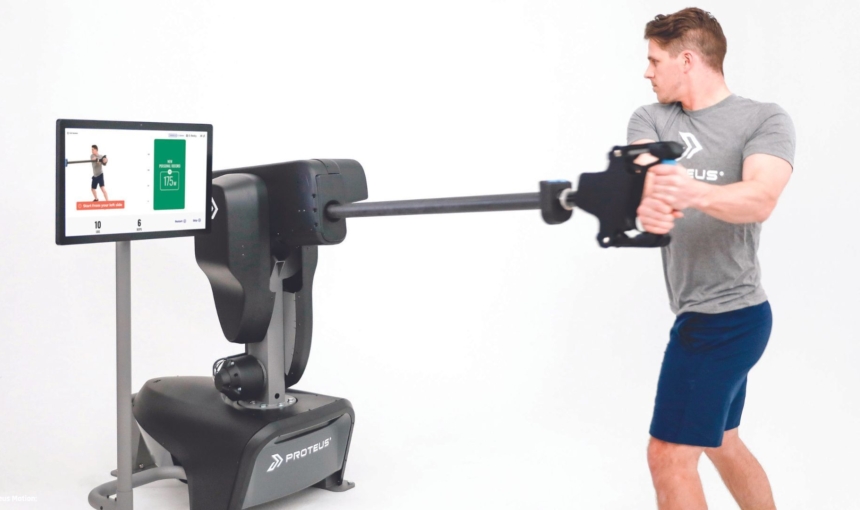
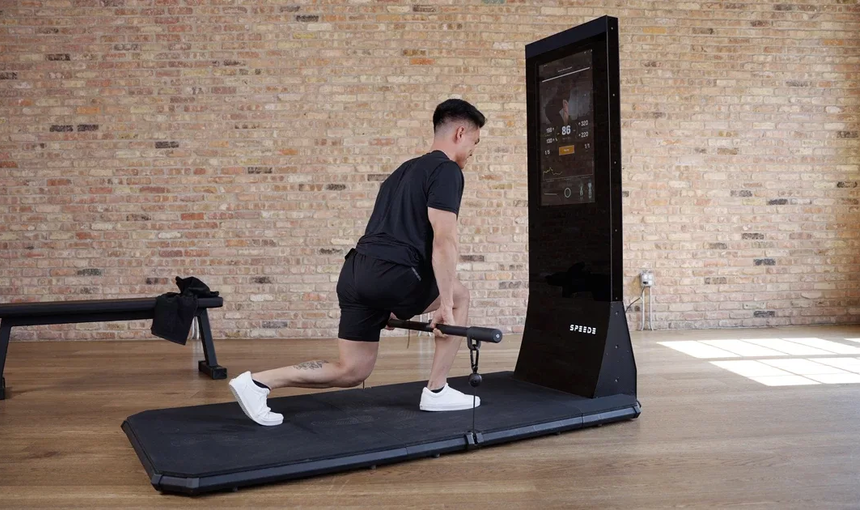
Wristbands, bar-mounted velocity sensors or resistance and velocity training systems are attempting to enter weight rooms, tracking limb & bar speed, and fatigue. Some inform intra-session decisions, but most options have either pivoted or faded–failing to offer more than sophisticated rep counting.
Across context, each category attempts to solve the problem with a valid solution. Collectively, none establishes a common reference for muscle capacity & function.


Building the Reference
Strength training is no longer reserved for bodybuilders. Nor is muscle health a concern for purists.
Hybrid competitions and strength-driven events are expanding well beyond elite lifters. Commercial gyms are attracting new audiences. GLP-1 and protein-maxxing have exposed the importance of muscle mass and strength in everyday performances.
We no longer lift for aesthetics alone. Muscle is now understood as central to systemic health and performance.
Yet, the gym remains one of the last low-fi spaces–and that has value. But leaving muscle training entirely to intuition is a costly blind spot and strength gains can be obtained with calibrated clarity–simple, low-friction signals without over-instrumenting.
The goal isn’t to replace the art of lifting with data, but to give it clearer anchors—while preserving what makes strength training a craft: the feel of movement, pacing effort, and learning one’s own capacity.
Until mass-market tools prove as reliable as heart rate or activity trackers, fundamentals will prevail: grip strength and maximal reps of select compound movement put against personal bests and matched population references.
Cardio matured around zones and ceilings.
To reach its “Zone 2” moment, strength training needs its own equivalent: load relative to percent body weight, bar velocity profiles, total load moved per set.
