FUN CLOSES THE GAP
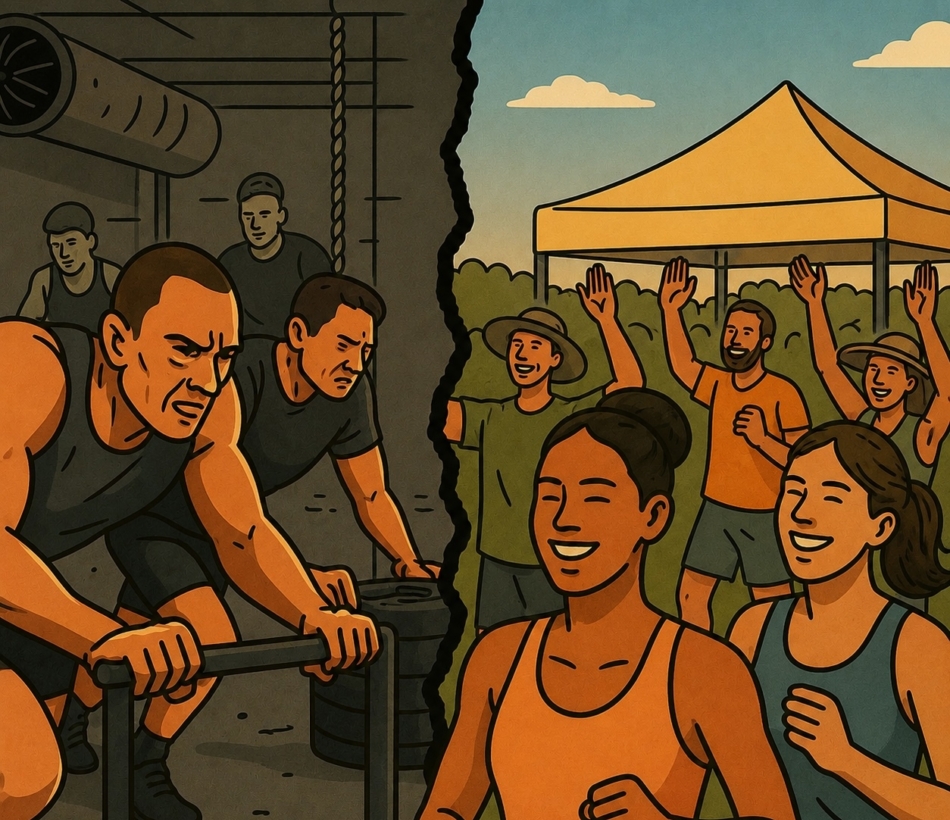
Physiological differences between men and women are real. But as distance increases, some traits compound in women’s favour, shrinking the gender gap until the advantage entirely shifts.
Distance Rewrites the Rules
In Marathon or competitive fitness events, men are roughly 10% faster ; in weight lifting, the advantage grows greater. But in ultra-endurance events, women are closing in on men, even beating them on occasion.
Women make up for the deficit in muscle mass by relying on a distinct set of physiological advantages, including carrying more fatigue-resistant slow-twitch muscle fibers, oxidizing a greater proportion of fat – a more sustainable and efficient fuel source, and being more pain and fatigue resistant. Lower testosterone meanwhile is no liability as it contributes to more conservative pacing strategy and less risk taking.
But physiology only explains one side of endurance performance. The other is behavioural – and it's the part men are still catching up on.
Fun as Competitive Edge
Rachel Entrekin became the first woman to win overall at Cocodona 250 ultra-distance race and credited the victory to one decision: having fun on the trails.
Many athletes treat joy as a byproduct of good performances – something to savour once the event is over, if expectations are met.
But having fun alters how athletes respond to stress and makes them faster.
Smiling – even if forced – reduces heart rate and blood pressure in stressful situations, while being optimistic lowers cortisol. Athletes who smile, visualize happy emotions or hear encouraging voices during hard efforts experience lower perceived exertion and last longer.
Frowning and negativity are inefficient energy sinks, consuming attention without improving performance. The trick is not to ignore pain, but to divert the mind to more productive and positive states like gratitude and excitement.
The men who last longest seem to have got the clue. In long-distance running, Kilian Jornet and Mathieu Blanchard do not dwell on their suffering and instead compete with a smile, taking victory – or bump in the road – lightly and with wisdom. In cycling, Tadej Pogačar enjoys being targeted and counters every attack with aggressive pleasure.
This isn't a PR posture. It's a behavioural edge, and it’s trainable.
Good Vibes, Better splits
Choose the feeling you want at the finish line, then work backwards.
The most underrated move is setting emotional goals alongside time and placement goals as outright performance goals.
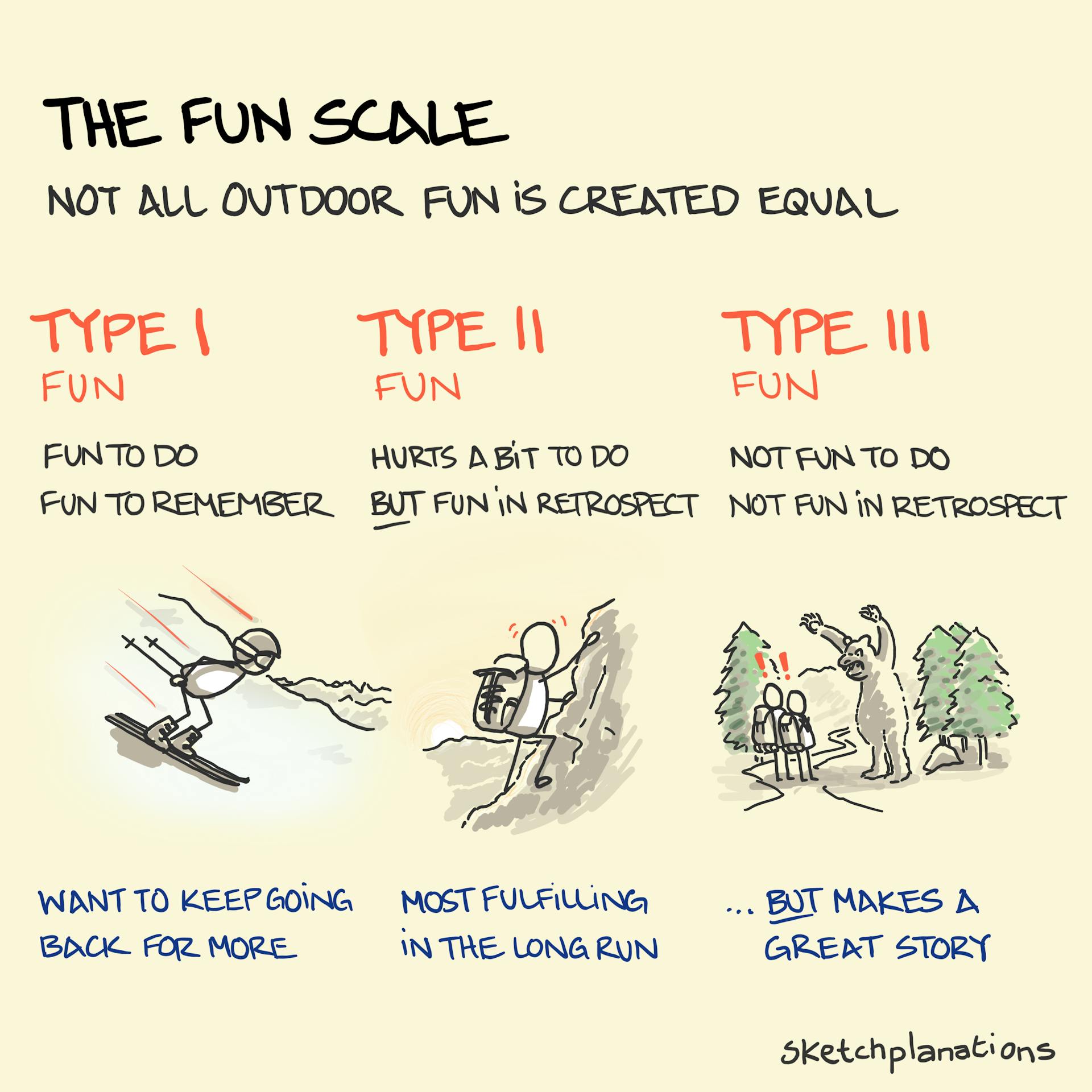
Plan how to face challenging situations before they hit. Look forward to moments of hardship – that's the whole point of training and competing. Nothing sets Type II fun in stone. Deliberately choose to embrace pain and discomfort mindfully, and reframe adversity as occasions to show what you are capable of.
Treat easier stretches as front-loading, not coasting. Bank positivity early on. Cheer fellow opponents or thank a volunteer or supporter mid-event. Altruistic gestures and expressed gratitude may look like signs of concession or of losing focus, but they redirect energy into powerful stress relievers.
Grit-as-identity is out. Reframe mental toughness which shouldn’t be about pushing indefinitely, but catching early signals of malfunction, solving the problem, and resetting – without the downward mental spiral. Ultra-endurance events reward behavioural excellence and problem-solving over physiological advantages.
Beyond the Finish Line
I want to make sure that I like who I am when things are tough, whether that's in sports or whether that's in life, I think you can practice modeling the behavior that you want to demonstrate
That's the whole argument.
For most of us, sports offer a controlled and low-stake arena perfect to practice the behaviours we wish to demonstrate in real life. And unlike most higher-stakes moments in the outside world – real life, you chose to be there.
Women’s growing edge in endurance events, challenges our definition of high performance – in and outside the world of sports. As environments become more unpredictable, those who manage emotions best and stay anchored in gratitude, enjoy and win the longest.